In this article
Residential Framing Options (2026): Costs, Tradeoffs, and Why Your House Plan Changes Everything
Framing is the “skeleton” of your home—walls, floors, and roof structure that everything else depends on. It’s also one of the easiest phases to mis-budget because two houses with the same square footage can have very different framing packages once you factor in roof complexity, wall heights, spans, local codes, wind/seismic requirements, and the local labor market.
In 2026, national cost guides commonly put full-house framing around $7–$16 per square foot (SF) (materials + labor) for typical homes, with labor often cited around $4–$10/SF and materials $3–$6/SF. (Sources: Angi 2026 framing cost guide; MySitePlan 2026 framing cost guide.) But those are averages—real projects routinely land outside them.
This article breaks down the major residential framing options in 2026 and shows why pricing varies so widely that a line-item estimate tied to your plan and your ZIP code is the only reliable way to budget.
Framing cost reality check: “$7–$16/SF” can become $6 or $30+
Most homeowners hear “cost per square foot” and assume it’s a dependable shortcut. For framing, it’s not—because framing cost is driven by linear footage of walls, number of corners/returns, openings, story count, span engineering, and roof geometry more than it is by floor area.
Here are 2026 national reference ranges (estimates; actual bids vary):
- Full-house framing: $7–$16/SF (Angi, updated Apr 4, 2026; MySitePlan updated Mar 30, 2026)
- Roof framing (stick-built): $6–$9/SF (Angi 2026)
- Roof trusses: $1.50–$4.50/SF (Angi 2026)
- Sheathing: $2–$8/SF (Angi 2026)
- Housewrap (often bundled with sheathing): about $0.50–$1.00/SF (MySitePlan 2026)
Even within that “same square footage,” you can see the spread. A simple 2,000 SF ranch with a basic gable roof might frame near the low end. A 2,000 SF home with tall walls, multiple roof valleys, steel beams, and a large amount of glazing can push far higher.
The big residential framing options (and when they make sense)
1) Conventional wood stud framing (“stick-built”)
What it is: Dimensional lumber studs (commonly 2x4 or 2x6), plates, headers, engineered wood where required, plus floor and roof framing.
Why it’s popular: Familiar to nearly every residential crew, generally fast, and flexible for changes.
2026 cost pattern (estimates):
- Materials commonly fall into the broad $3–$6/SF framing-material bucket cited by major cost guides. (Angi 2026; MySitePlan 2026)
- Labor commonly falls into the $4–$10/SF range cited for framing labor. (Angi 2026; MySitePlan 2026)
Cost volatility drivers:
- Lumber market swings, species availability, delivery distance, and jobsite waste.
- Engineering requirements (LVLs, PSL/LSL, glulam beams) for open plans and long spans.
- Code-driven upgrades like hurricane ties, increased nailing schedules, and shear wall requirements.
2) Advanced framing / “optimum value engineering” (OVE)
What it is: A wood framing approach that uses fewer studs and thermal bridges (examples: 24" o.c. spacing in some assemblies, 2-stud corners, insulated headers where allowed, aligned framing).
Why builders consider it:
- Potentially less lumber and improved energy performance.
- Can reduce thermal bridging and create more insulation cavity volume.
Why it doesn’t always save money:
- Some jurisdictions/engineers require tighter spacing in high-wind/seismic zones.
- Framers unfamiliar with OVE may price in “risk” or spend more time detailing.
- Wall bracing/shear requirements can negate stud savings.
Bottom line: OVE can reduce material counts on some plans, but it’s highly plan- and code-dependent. It’s not a guaranteed cost reduction.
3) Engineered wood framing (I-joists, LVLs, PSL/LSL, truss floor systems)
What it is: Using engineered components for floors/roofs and long-span beams—often to support open layouts and reduce squeaks/deflection.
Where it changes cost:
- Engineered members typically cost more than commodity dimensional lumber, but can reduce labor (fewer posts/walls) and reduce callbacks.
- Coordination matters: HVAC chases, plumbing drops, and point loads can force redesigns that add cost quickly.
Hidden cost driver: The more you “open up” a plan (fewer interior bearing walls), the more likely you are to pay for larger beams, hangers, and engineered load paths—costs that aren’t obvious from square footage alone.
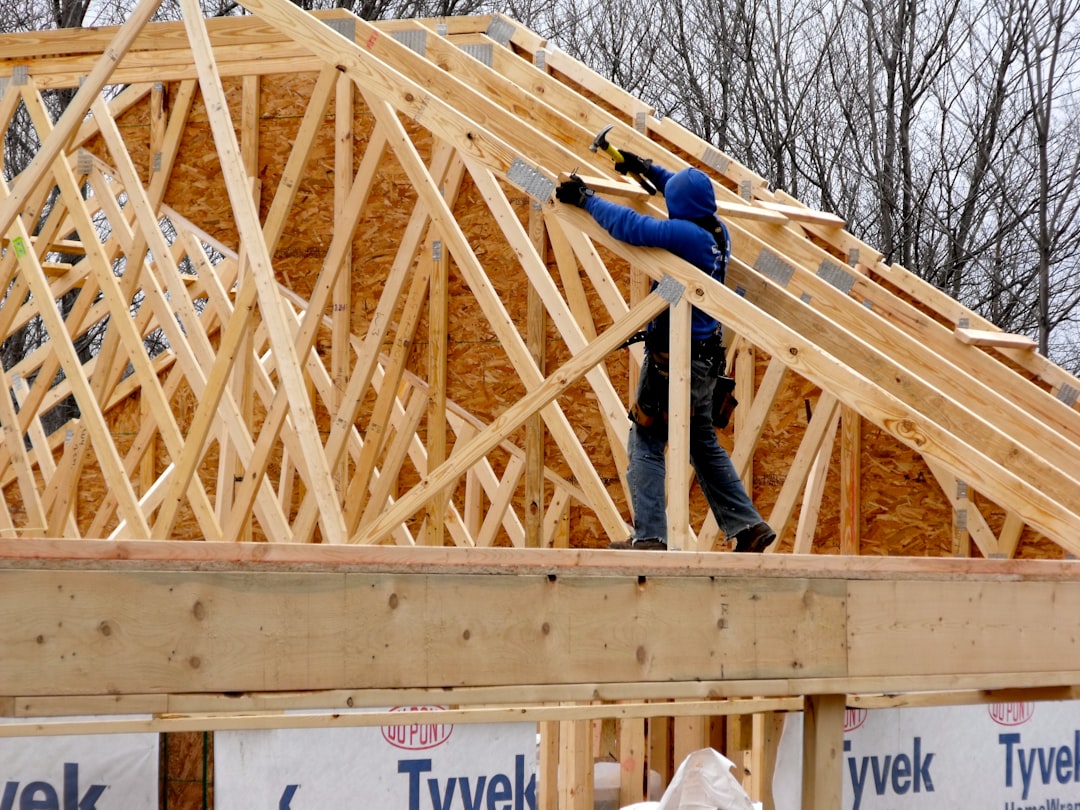
4) Roof trusses vs. stick-built roofs
Trusses (prefabricated):
- Often priced in broad cost guides around $1.50–$4.50/SF for installation (Angi 2026).
- Can reduce onsite labor time and keep geometry consistent.
- Can require cranes or lull time; delivery access and staging space matter.
Stick-built roofs:
- Cost guides often cite $6–$9/SF (Angi 2026).
- Can be better for complex rooflines, vaulted ceilings, and custom framing details.
- More onsite labor and greater exposure to weather delays.
The “gotcha”: Complex roof architecture (multiple hips, valleys, dormers, intersecting gables) can erase the cost advantage of either system. Trusses can become custom-engineered and pricey; stick-built roofs can become labor intensive and slow.
Steel framing (light-gauge) vs. wood framing
Steel framing gets attention for being straight, insect-resistant, and non-combustible—yet many residential projects still choose wood because of crew familiarity and total installed cost.
2026 reference ranges (estimates):
- Some cost guides cite wood materials around $1–$5/SF and steel materials around $2–$4/SF, with steel sometimes costing more to install due to heavier hardware/connection requirements. (Angi 2026; MySitePlan 2026 discussion)
Where steel can make sense:
- Termite-heavy regions where risk management matters.
- Fire-prone areas (though whole-house fire performance involves much more than studs).
- Projects where straightness and uniformity reduce finish issues.
Why costs vary wildly:
- Local availability of experienced steel framing crews.
- Different fastening systems (screws, clips, connectors) and inspection expectations.
- Integration with wood elements (roof trusses, sheathing attachment, window bucks) can add detailing labor.
Panelized framing and off-site prefabrication
What it is: Walls or wall sections framed in a factory and shipped to the site.
Potential benefits:
- Faster “dry-in” time (less weather exposure).
- Reduced jobsite waste and potentially tighter quality control.
Why price comparisons are tricky:
- Shipping distance and logistics (oversize loads, staging).
- Crane time and access.
- Factory standards vs. your plan’s custom details (bump-outs, tall walls, complex openings).
On one plan, panelization can reduce onsite labor and schedule risk. On another, it can add cost due to transport constraints and rework for field conditions.
SIPs (Structural Insulated Panels): fast shell, different cost structure
SIPs combine structure + insulation into one panel system.
Cost variability drivers:
- Fewer framing labor hours onsite, but higher material/package costs.
- Increased need for up-front planning (electrical chases, window/door coordination).
- Specialty crews and fewer bidders in some markets.
SIPs can be compelling when energy performance and schedule are priorities, but the only way to compare fairly is to price the whole shell scope (panels, splines, sealants, crane, labor, air sealing details, and how trades will run services).
ICF (Insulated Concrete Forms): not “framing” in the wood sense, but a major option
ICF is a wall system where foam forms are stacked and filled with reinforced concrete. It changes your wall “framing” into a concrete structure.
Where ICF can affect your budget:
- Increased concrete/rebar costs vs. wood studs.
- Reduced labor for traditional stud walls, but different specialty labor.
- Potential downstream savings (energy performance, storm resistance), depending on climate and insurance.
The key budgeting lesson: If you’re comparing ICF to wood framing, you’re not just comparing studs—you’re comparing an entire wall assembly, labor pool, engineering, and sometimes permit/inspection requirements.
The four biggest reasons framing prices vary by city and region (2026)
1) Labor market pressure
Labor is frequently the largest swing factor because it’s local and it changes fast. Gordian’s 2026 RSMeans reporting showed construction labor wages rising, with an average wage change of +4.6% entering 2026. (Source: Gordian/RSMeans press release via GlobeNewswire, March 10, 2026.)
In practical terms, even if lumber prices stabilize, a hot local market can push framing bids up quickly—especially in fast-growing metros where subcontractors can pick and choose jobs.
2) Code requirements (wind, seismic, snow load, wildfire interface)
A “standard” wall in one county may require:
- More hold-downs and straps
- More sheathing or thicker sheathing
- Different nailing patterns
- Engineered shear walls/portals for large window openings
Those aren’t line items you can guess from square footage. They’re plan-and-jurisdiction specific.
3) Material logistics and access
Remote builds, tight urban lots, mountain sites, or islands can add:
- Delivery surcharges
- Limited staging space (more handling time)
- Crane/telehandler needs
- Higher waste factors
4) Permits and inspections timing
Framing is inspection-heavy (foundation-to-framing tie-ins, shear, structural connectors, fire blocking). Delays cost money through idle crews and rescheduling.
Even “typical” building permit fees vary by city and project scope; guides commonly show wide metro ranges (e.g., hundreds to several thousand dollars). (Example ranges cited in MySitePlan’s 2026 permitting discussion.)
Plan features that quietly add thousands to framing
Here’s where homeowners get surprised—because these items don’t always “feel” expensive until they show up as framing labor and engineered components:
Complex rooflines
Multiple valleys, dormers, and hips can multiply layout time, cuts, and waste. They also often require more engineering (especially for large spans).
Tall walls and stacked spaces
A 9' ceiling vs. a 10' or 12' ceiling changes stud length, bracing requirements, scaffold time, and sometimes shear design.
Large openings and window packages
More/larger windows mean more headers, king/jack studs, engineered lintels, and tighter shear wall detailing.
Open-concept spans
Removing interior bearing walls shifts loads to beams and point loads—often requiring LVLs, steel, posts, and larger footings below.
Two-story vs. one-story
Even national guides note two-story framing can add cost per square foot compared to a single-story build. (Angi 2026 notes an added cost for multi-story framing.)
A practical 2026 framing budget framework (useful—but still not “your price”)
If you’re early in planning, this is a more realistic way to think about framing than one single number:
- Start with a national framing range: $7–$16/SF for full-house framing (Angi 2026; MySitePlan 2026).
- Adjust up or down for plan complexity:
- Simple rectangle + simple roof: aim low-to-mid range
- Lots of corners + complex roof + big glass: aim high range (or higher)
- Add related shell items that often get quoted separately:
- Roof system: trusses or stick frame
- Sheathing: $2–$8/SF (Angi 2026)
- Housewrap/weather barrier: roughly $0.50–$1.00/SF (MySitePlan 2026)
- Factor local labor escalation: 2026 labor trends continue upward (RSMeans/Gordian noted +4.6% wage change entering 2026).
- Include contingency for framing changes: Even minor layout changes can cause rework and inspection delays; major structural changes can be costly (cost guides often cite wide ranges for changes).
This approach won’t give you a bid—but it helps you avoid the common mistake of budgeting framing as a single flat number.
Key Takeaway
Residential framing in 2026 isn’t one decision—it’s a web of decisions: wood vs. steel, trusses vs. stick-built roofs, engineered spans vs. bearing walls, code requirements, and local labor availability. National averages like $7–$16/SF (Angi 2026; MySitePlan 2026) are useful for orientation, but they can’t tell you what your plan will cost in your county—especially when labor wages have been rising (RSMeans/Gordian reported +4.6% entering 2026) and when structural requirements vary by region.
If you want a budget you can trust, you need line-item pricing that reflects your exact house plan, structural approach, and location-specific costs.
See what a line-item estimate looks like (then price your plan)
costtobuildahouse.com has been providing detailed cost-to-build reports for nearly 20 years, and framing is one of the areas where a line-item approach makes the biggest difference—because it captures the real drivers (roof complexity, openings, engineering, local labor, and more).
- Start by exploring the free interactive example: Try a free demo report
- When you’re ready, get pricing tailored to your house plan and location for $32.95: order your custom Cost To Build report
Sources (2026)
- Angi — How Much Does It Cost to Frame a House? [2026 Data] (Updated Apr 4, 2026): https://www.angi.com/articles/cost-to-frame-house.htm
- MySitePlan — The Cost To Frame A House In 2026 (Last updated Mar 30, 2026): https://www.mysiteplan.com/blogs/news/cost-to-frame-a-house
- Gordian / RSMeans (via GlobeNewswire on Yahoo Finance) — Construction Labor Wages Rose 4.6% Last Year, According to Gordian’s 2026 RSMeans Data (Mar 10, 2026): https://finance.yahoo.com/news/construction-labor-wages-rose-4-123000993.html