In this article
Cost To Build A 1500 Sq Ft House (2026)
If you’re trying to budget for a 1,500 sq ft home in 2026, you’ve probably already seen a wide range of numbers online. That’s not because anyone is “hiding the ball”—it’s because construction costs truly are that variable.
A 1,500 sq ft house can be a simple rectangular ranch on a flat lot with a slab, mid-grade finishes, and municipal utilities already at the street… or it can be a complex roofline on a crawlspace, built on a sloped site that needs retaining walls, upgraded windows, higher-end cabinets, a longer driveway, and specialty labor that’s scarce in your county. Those two projects are both “1,500 sq ft,” but they don’t cost the same.
This guide uses current 2026 data points to show the realistic ranges and—more importantly—why the range is so wide, so you can stop chasing a single number and start planning around a detailed, location-specific estimate.
The big picture: what does a 1,500 sq ft house cost in 2026?
Estimated national construction cost range (excluding land): $225,000 to $450,000 for a 1,500 sq ft home (about $150 to $300 per sq ft). That’s a broad estimate, but it’s grounded in current 2026 “cost to build” guidance. Autodesk’s 2026 homebuilding cost overview puts typical construction in the $150–$300 per sq ft range and specifically lists 1,500 sq ft at $225,000–$450,000 as an average range. (Source: Autodesk Digital Builder, “How much does it cost to build a house in 2026?” updated Nov 19, 2025.)
That estimate is a starting point—not a quote—because “per-square-foot” math hides the biggest drivers of overages:
- Your local labor market and subcontractor availability
- Foundation and site conditions (soil, slope, frost depth, water table)
- Exterior complexity (roof geometry, window counts, siding type)
- MEP scope (HVAC complexity, electrical service size, plumbing runs)
- Finish level (cabinets, countertops, flooring, tile, trim, fixtures)
- Permits/impact fees and inspection requirements (often very local)
A practical 2026 “range table” for a 1,500 sq ft build (construction only)
Below is a simplified way to think about ranges. These are estimates to illustrate variability, not universal pricing.
| Build scenario (1,500 sq ft) | Approx $/sq ft (2026 est.) | Approx total (2026 est.) | What this usually implies |
|---|---|---|---|
| Budget/basic | $150–$185 | $225,000–$277,500 | Simple footprint, slab or basic crawl, stock finishes, minimal site work |
| Mid-range | $185–$250 | $277,500–$375,000 | Typical custom/semi-custom, average site work, moderate upgrades |
| High-end/custom | $250–$300+ | $375,000–$450,000+ | Premium finishes, complex rooflines, upgraded systems, higher local labor |
Why the same 1,500 sq ft plan can vary by $100,000+ in the real world
Square footage is only one input. Here are the cost drivers that routinely swing totals the most.
1) Location: labor pricing and regional productivity differences
Labor is commonly one of the largest slices of the construction budget. Autodesk notes labor can represent roughly 30%–50% of total construction cost, and the same trade can price differently depending on metro demand, permit complexity, and availability. (Source: Autodesk Digital Builder, 2026 article.)
To make it concrete: even a “standard” scope like framing can become volatile when local crews are booked out, or when the design requires more labor hours (complex roof, tall walls, multiple bump-outs).
One way to see how labor affects a job is to look at trade hourly rates. For example, Angi’s 2026 cost data lists carpenter labor commonly at $40 to $100 per hour (with many variables by experience and region). (Source: Angi, “How Much Do Carpenters Charge Per Hour? [2026 Data]” updated Mar 18, 2026.)
That spread is exactly why national averages struggle:
- A high-demand metro with strict inspection schedules can push labor to the top of the range.
- A smaller market with more competition among subcontractors may price closer to the low-to-mid end.
2) Site prep: the line item that blows up “perfect world” budgets
Many online estimates assume a build-ready lot. But “site work” can include:
- Clearing trees, grubbing, hauling
- Excavation and grading
- Rock removal or over-excavation for poor soils
- Temporary construction access (especially in wet seasons)
- Trenching and utility runs
- Driveway length and material
- Drainage, erosion control, retaining walls
Even modest changes can add five figures. A sloped lot, expansive clay soil, or a long distance to utility tie-ins can turn “site prep” into one of the most expensive categories—without changing the house plan at all.
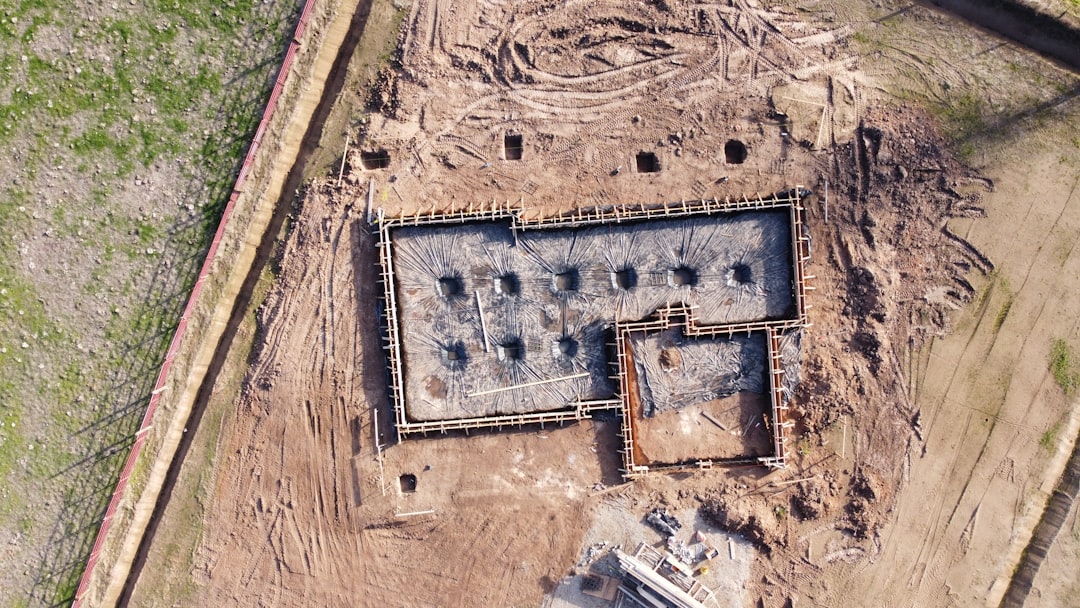
3) Foundation choice: slab vs crawlspace vs basement
Foundation type is a major cost lever, and it’s often dictated by climate and site conditions—not preference.
Typical 2026 ranges called out in homebuilding cost guidance include:
- Slab foundations: often $8,000–$15,000 (basic cases)
- Basements: can range broadly, cited as $20,000–$80,000 depending on scope and finish level (Source: Autodesk Digital Builder, 2026 article.)
For a 1,500 sq ft house, the difference between a basic slab and a full basement can change the budget dramatically—especially once you add excavation complexity, waterproofing, egress requirements, and whether the basement is finished.
4) Framing and lumber: commodity pricing affects real bids
Framing is one of the largest material-intensive phases, and it’s sensitive to lumber prices and design complexity.
Lumber pricing in 2026 is still something builders watch closely. Trading Economics reported lumber at about $571.48 per 1,000 board feet on April 13, 2026 (benchmark/market reference). (Source: Trading Economics, Lumber price page updated Apr 13, 2026.)
Two takeaways:
- Lumber swings don’t translate 1:1 to your total build cost, but they absolutely move framing packages.
- House shape matters: a simple rectangle uses fewer corners, headers, and waste cuts than a plan with lots of jogs and roof intersections.
5) Mechanical systems: HVAC, electrical, and plumbing aren’t “one number”
For 1,500 sq ft, you might assume mechanicals scale down neatly. But mechanical costs are driven by choices and code, such as:
- Heat pump vs gas furnace; dual-fuel options
- Ducted vs ductless
- ERV/HRV ventilation needs
- Panel size (e.g., 200A vs larger for electrification)
- Number of bathrooms and fixture groups
- Distance from water heater to fixtures (hot water delivery strategy)
- Local requirements for fire sprinklers (in some jurisdictions)
Even at the “rule of thumb” level, electrical installation is sometimes priced per square foot. Autodesk cites electrical installation at around $4 to $9 per sq ft (Source: Autodesk Digital Builder, 2026 article). On a 1,500 sq ft home, that single category could be $6,000 to $13,500—and that’s before you get into upgrades like EV chargers, service trenching, or higher-end lighting packages.
Permits, fees, and “soft costs”: the budget categories people forget
Construction cost isn’t just lumber and labor. You also have “soft costs” and government fees that vary sharply by location.
Typical building permit ranges in 2026
Permit fees are intensely local. But as a planning range, My Site Plan’s 2026 permit cost guide cites:
- Smaller trade permits often $50–$300
- Larger construction permits often $500–$2,000
- “Building a new house” permits often $1,000–$3,000 (with many variables)
(Source: MySitePlan.com, “How Much Does a Building Permit Cost in 2026?” updated Mar 19, 2026.)
Important: those numbers may represent only the building permit itself. Many areas also add:
- Plan review fees
- Water/sewer connection or inspection fees
- School, park, traffic, or “impact” fees
- Utility tap fees
- Engineering review fees (stormwater, grading, driveway permits)
- Required tests (soil bearing, compaction, concrete tests)
This is one of the biggest reasons two households building “the same house” in different counties can land tens of thousands apart.
A realistic 1,500 sq ft cost breakdown (example ranges)
Here’s a conceptual breakdown to show how line items stack. Your actual costs will depend on your plan, specifications, and location.
Example total (mid-range target): $300,000–$375,000 (construction only, excluding land)
- Site work & utilities: $15,000–$60,000
- Foundation: $15,000–$60,000+ (type/site dependent)
- Framing & sheathing: $35,000–$70,000+ (design + lumber market)
- Roofing & exterior: $25,000–$60,000
- Windows & exterior doors: $12,000–$35,000
- Plumbing: $10,000–$25,000
- Electrical: $6,000–$18,000
- HVAC: $8,000–$20,000
- Insulation & drywall: $12,000–$35,000
- Interior finishes (paint, trim, flooring): $25,000–$75,000
- Cabinets & countertops: $12,000–$45,000
- Appliances: $4,000–$20,000
- Driveway/flatwork/landscaping: $5,000–$30,000
- Permits/fees/inspections: $1,500–$15,000+
- Builder overhead/GC and contingency: often 10%–20%+ combined, depending on contract structure and risk
The point isn’t the exact amounts—it’s that a “simple” decision like upgrading countertops, adding a bathroom, changing the foundation, or building on a tougher lot can ripple across multiple trades.
Regional and city-level variation: why “national average” is a trap
Even with a clean set of drawings, contractors price in local realities:
- High-cost coastal metros (and certain mountain markets) often see higher labor, stricter energy codes, and more expensive subcontractor schedules.
- Growing Sun Belt markets can swing wildly depending on labor availability and storm/wind requirements.
- Rural builds can look cheaper on paper—but long travel times, fewer subcontractors, and long utility runs can erase savings fast.
Instead of asking “What’s the national average?”, the better question is:
“What does this plan, with these selections, cost to build in this ZIP code—including site work, permits, and realistic local labor?”
How to get a more accurate estimate (without overpaying or underbuilding)
Before you commit to a builder or construction loan, try to pin down the variables that cause the biggest swings:
Start with plan-specific questions
- Is the plan a simple footprint or highly cut up?
- What is the roof complexity (hips/valleys/dormers)?
- How many baths and wet walls?
- How many windows and what performance level?
- Any special structural spans (LVLs, steel beams, vaulted ceilings)?
Then add site-specific questions
- Slab/crawl/basement required for your area?
- Soil report needed? What’s the bearing capacity?
- Is the lot flat, sloped, rocky, heavily treed?
- How far are power/water/sewer/gas connections?
- Any floodplain or special drainage requirements?
Finish with spec-level decisions
- Cabinets: stock vs semi-custom vs custom
- Flooring: LVP vs hardwood vs tile-heavy layouts
- Countertops: laminate vs quartz vs granite
- Fixture packages: builder-grade vs premium
- HVAC and insulation strategy (especially if you want high efficiency)
Until those are defined, “$X per square foot” is just a conversation starter.
Key Takeaway
A 1,500 sq ft house in 2026 can realistically cost about $225,000 to $450,000 to build (excluding land) based on current national-range guidance, but the range is wide by design: location, site prep, foundation choice, local labor conditions, and finish selections can easily swing your total by $100,000+.
If you only take one thing from this article, make it this: square footage doesn’t determine your budget—your plan details and your location do.
Next step: see what a real line-item report looks like (free), then price your plan (about $33)
If you want to move from broad averages to a build budget you can actually plan around, the fastest way is to review a line-item example first.
- Try a free demo report to see the format, detail level, and categories before you buy: Try a free demo report
When you’re ready, you can get a custom, plan-specific Cost To Build report for $32.95—tailored to your location and your house plan’s specifications: order your custom Cost To Build report
CostToBuildAHouse.com has been providing detailed cost-to-build reports for nearly 20 years, and the goal is simple: help you understand the real costs—line by line—before construction decisions get expensive.