In this article
Modular Vs Stick Built Cost (2026): What You’ll Really Pay (and Why It Varies So Much)
If you’re comparing modular vs. stick-built construction in 2026, you’ve probably seen simple headlines like “modular is cheaper” or “stick-built holds value better.”
The truth is more complicated—and that complexity is exactly why most “average cost” numbers can mislead you.
In 2026, modular can be less expensive on paper because factory production reduces onsite labor and weather delays. But stick-built can be just as competitive in many locations, especially when modular delivery, crane set, site constraints, or local code requirements add hidden costs.
Below is a current, data-backed look at 2026 pricing (with sources), plus the real-world variables—location, site work, foundation, finishes, labor markets, and permitting—that can swing your final build cost by tens (or hundreds) of thousands.
Quick definitions: what you’re actually comparing
Modular home (factory-built modular): A home built in sections (modules) in a factory, then transported and assembled on a permanent foundation. It must meet the same local/state building codes as site-built homes (not HUD manufactured-home rules).
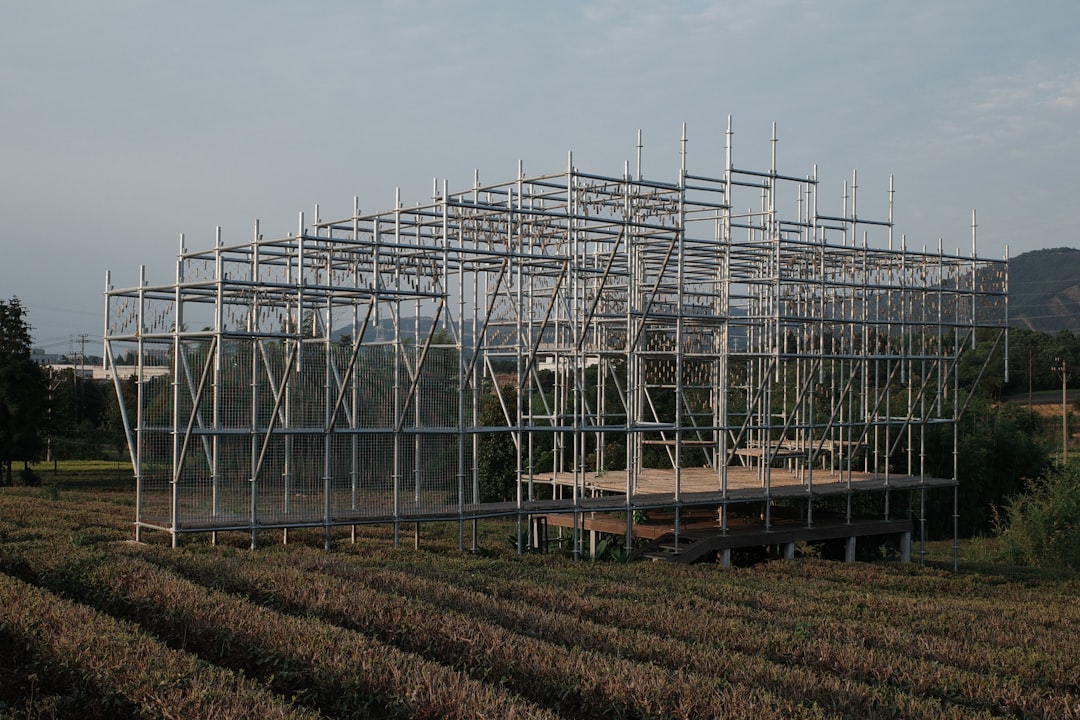
Stick-built (site-built): A home framed and built onsite, typically with lumber framing, built progressively from foundation through dry-in to finishes.
Important: Many costs are identical between the two—land, excavation, foundation, utilities, driveway, permits, inspections, landscaping, and often a big chunk of finishes. So your “modular vs stick-built” decision usually comes down to where the labor happens, how the schedule behaves, and what unique fees get introduced.
2026 cost ranges (estimates) you can use as a starting point
The ranges below are national estimates and assume you’re comparing reasonably similar quality levels. Your actual numbers depend heavily on your plan and location.
Modular construction (home only vs. fully finished onsite)
Angi’s 2026 data pegs modular home pricing at roughly $80–$160 per sq. ft. (typically referring to the modular build scope, not including every onsite cost), with total project costs varying widely by land and site work. Angi also notes modular projects averaging around $240,000, but stretching from basic small builds to custom projects well above that. Source: Angi (updated Mar 17, 2026).
https://www.angi.com/articles/modular-home-cost.htm
Rule of thumb (2026 estimate):
- Modular “structure package”: ~$80–$160/sf
- All-in modular project (including foundation/site work/utilities/permits/finishes that aren’t in the factory scope): often lands in a much wider band, commonly comparable to site-built in many markets
Stick-built / site-built construction
Angi’s 2026 new-home construction data shows the average build cost around $322,836, with typical homeowner ranges from $138,769 to $531,039 (and much higher for luxury/metro builds). They also cite broad custom-home pricing from $100 to $500 per sq. ft., with an “average” around $150 per sq. ft. Source: Angi (updated Mar 17, 2026).
https://www.angi.com/articles/how-much-does-it-cost-build-house.htm
Rule of thumb (2026 estimate):
- Stick-built (all-in construction, excluding land): roughly $150–$300+/sf for many standard builds, with luxury/complex metros far higher
Why these ranges overlap so much
Because “modular” doesn’t automatically remove:
- foundation cost
- utility trenching and hookup fees
- permits/impact fees
- driveway, grading, retaining walls
- finish upgrades
- local labor to assemble, marry modules, and finish tie-ins
In other words: modular can reduce onsite framing and some schedule risk, but it doesn’t eliminate many of the most expensive categories.
The biggest cost driver in 2026: local labor (and it hits the two methods differently)
Labor is one of the most regional parts of any build. Even when material pricing is relatively “national,” labor pricing is local—and in 2026, labor availability remains a major factor for many builders.
A useful reference point: the U.S. Bureau of Labor Statistics (BLS) lists carpenters at a median $28.51/hour (May 2024 data, published in the Occupational Outlook Handbook and still commonly used as a baseline for recent-year comparisons). Source: BLS OOH (last modified Aug 28, 2025).
https://www.bls.gov/ooh/construction-and-extraction/carpenters.htm
What that means in plain English:
- In high-demand metros, the “loaded” cost (wages + payroll taxes + insurance + overhead + profit) can be far higher than the wage number.
- Stick-built homes are more exposed to local framing labor availability and jobsite productivity.
- Modular shifts some labor to the factory—so if your local jobsite labor market is tight or weather is disruptive, modular can reduce risk.
But modular still requires local labor for:
- foundation
- crane set and setting crew
- mechanical tie-ins (plumbing/electrical/HVAC connections)
- exterior finish continuity and weatherproofing at seams
- punch-out, trim, decks/porches, steps, inspections
“All-in” cost isn’t one number—here’s what actually changes the budget
1) Site preparation can erase modular savings
Angi notes land and site preparation can add $10,000 to $200,000 depending on location and whether utilities exist. Source: Angi modular cost (Mar 17, 2026).
https://www.angi.com/articles/modular-home-cost.htm
This is where two builds that look identical on paper diverge fast:
- flat suburban lot with existing utilities: modest site costs
- rural lot with driveway cut, long utility runs, septic/well, rock excavation, or heavy grading: major site costs
And modular can add extra constraints:
- delivery access (turn radius, slope, road weight limits)
- staging area for modules
- crane access and soil bearing capacity for crane outriggers
2) Foundation type changes both methods (and sometimes favors one)
Even with modular, you need a permanent foundation. Angi’s modular data lists typical foundation pricing (estimates) by type:
- Basement: $20–$37/sf
- Crawl space: $6–$18/sf
- Pier and beam: $6–$12/sf
- Slab: $5–$16/sf
Source: Angi modular cost (Mar 17, 2026).
https://www.angi.com/articles/modular-home-cost.htm
A basement in a cold climate (deep frost footings, waterproofing, drain tile) can push costs up quickly—modular doesn’t make that go away. Meanwhile a slab in a mild climate can significantly lower the foundation portion for either method.
3) Modular introduces delivery + crane costs (and they can be big)
Angi reports modular delivery costs around $5–$10 per sq. ft., often totaling $3,000–$20,000 depending on distance and logistics. Source: Angi modular cost (Mar 17, 2026).
https://www.angi.com/articles/modular-home-cost.htm
In practice, two people can buy the same modular plan and get very different delivery pricing:
- 30 miles from the factory on easy highways: modest delivery
- 200+ miles away, remote mountain roads, seasonal restrictions: delivery can spike
- tight infill lot needing special crane scheduling: crane and set crew costs rise
Stick-built avoids module transport, but it can absorb higher jobsite time costs (weather days, repeated deliveries, waste, theft risk, and productivity issues).
4) Permits, plan check, and impact fees vary more by city than build method
Permits are rarely “one number,” and they’re not the same everywhere. Angi’s modular article cites permits often in the $500–$4,000 range with a ~$1,000 average, but that’s a broad national framing and doesn’t include every local fee category. Source: Angi modular cost (Mar 17, 2026).
https://www.angi.com/articles/modular-home-cost.htm
Meanwhile, Angi’s house-building article cites construction permit ranges around $500–$2,000 as a typical national estimate. Source: Angi house build cost (Mar 17, 2026).
https://www.angi.com/articles/how-much-does-it-cost-build-house.htm
Why the disconnect? Because “permits” can mean:
- building permit
- plan review / plan check fees
- engineering review
- school/park/road impact fees (often much larger than the permit itself)
- water/sewer connection fees or capacity fees
- stormwater management requirements
- energy code testing and documentation
City-level reality check (2026): Two projects with the same plan can have drastically different “soft costs” depending on whether you’re building in, say, a fast-growing suburb with impact fees vs. a rural county with minimal fees.
5) Finish level is where budgets quietly explode (modular or stick-built)
The biggest misconception is that modular automatically equals “basic finishes.” Many modular manufacturers offer customization—and Angi notes custom modular upgrades can add 20% to 100% above base designs. Source: Angi modular cost (Mar 17, 2026).
https://www.angi.com/articles/modular-home-cost.htm
So if you’re comparing:
- modular (base spec) vs stick-built (mid/high spec), you’re not comparing construction methods—you’re comparing finish packages.
Finish-driven cost multipliers include:
- window count and window performance (e.g., large black-frame units)
- cabinetry grade and layout complexity
- tile labor intensity (large-format, niches, curbless showers)
- countertop material
- flooring type and stairs
- HVAC zoning, heat pumps, ERVs, upgraded ducting
- exterior cladding (fiber cement, masonry, natural stone)
6) Plan design complexity can favor modular—or punish it
Some plans are naturally “factory friendly”:
- rectangular footprints
- stacked plumbing walls
- standard roof geometry
- fewer structural surprises
Others complicate modular:
- many offsets/bump-outs
- dramatic roof lines
- large spans needing steel or engineered framing
- site-specific architectural requirements
- steep-slope lots with walkout basements
Stick-built can sometimes absorb weird geometry more gracefully onsite, while modular can require more engineering, more modules, and more jobsite finishing.
Regional reality: why “modular is cheaper” depends on where you build
Angi’s 2026 data shows clear location swings for both modular and site-built:
-
Modular “average cost” examples by state cluster in the high-$230Ks to mid-$250Ks in their dataset (e.g., CA higher than many states). Source: Angi modular cost.
https://www.angi.com/articles/modular-home-cost.htm -
Site-built averages vary more dramatically, with examples like California ~$458,000 vs Georgia ~$291,000 (among other states listed). Source: Angi house build cost.
https://www.angi.com/articles/how-much-does-it-cost-build-house.htm
What this implies for your decision:
- In high-cost labor markets, modular may reduce risk and possibly total cost—if logistics are straightforward.
- In lower-cost labor markets, stick-built labor may be affordable enough that modular’s transport/crane premium cancels out much of the advantage.
- In remote areas, modular can be either a lifesaver (fewer onsite labor days) or a headache (delivery limitations).
And then there’s the “city effect”: even within one state, the difference between a rural county and a major metro can be enormous for trades, scheduling, and permit requirements.
A realistic comparison example (same plan, different outcomes)
Let’s take a simple hypothetical: a 2,000 sq. ft., 3–4 bedroom home on a typical lot, mid-grade finishes.
Scenario A: Suburban Midwest, easy access lot
Modular may be competitive because delivery is manageable and site prep is straightforward.
- Modular home package: $80–$160/sf (estimate; Angi) = $160k–$320k
- Delivery + set: often $3k–$20k (estimate; Angi)
- Foundation/site/utilities/permits/drive: can still be $40k–$120k+ depending on conditions
Result: could land near or slightly below an equivalent stick-built—or end up similar.
Scenario B: Coastal metro, tight infill lot
Stick-built might win because modular logistics get expensive:
- crane costs, street closures, staging limits
- higher engineering requirements
- higher finish expectations to match neighborhood comps Result: modular’s factory efficiencies can be outweighed by logistics and permitting friction.
Scenario C: Rural acreage with long utility runs + septic/well
This is where people are most surprised:
- the “house cost” is only part of it
- site costs can dominate the budget Result: modular vs stick-built may matter less than how expensive it is to make the site buildable.
Key Takeaway: modular vs stick-built cost in 2026 is a “site + plan + scope” equation, not a single number
In 2026, you can find credible national ranges like:
- modular: $80–$160/sf (often referencing the modular scope) (Angi, 2026)
- site-built: $100–$500/sf with broad averages around $150/sf for many standard builds (Angi, 2026)
But those numbers don’t answer the question most homeowners actually have: “What will my plan cost on my lot, with my finishes, under my city’s rules, with my local labor pricing?”
That’s why the modular vs stick-built conversation almost always ends up in the same place: a detailed, line-item estimate that accounts for site work, foundation choices, utilities, permit and impact fees, and the exact finish schedule—not just square footage.
Next step: see a real line-item report (free), then price your specific plan
If you want to move beyond broad ranges and see what a true cost breakdown looks like, the fastest way is to view a real example report first.
- Try a free demo report (interactive): https://startbuild.com/store/costtobuild/demo.aspx?returnUrl=https%3A%2F%2Fcosttobuildahouse.com%2Fget-started
- When you’re ready, order your custom Cost To Build report for your exact house plan and location for $32.95: https://www.costtobuildahouse.com/get-started
Cost-to-build estimates are only useful when they match your plan, your scope, and your area. That’s why costtobuildahouse.com has been providing detailed cost-to-build reports for nearly 20 years—so homeowners can stop guessing and start planning with real numbers.