In this article
Cost To Build A House In Maryland (2026)
If you’ve tried to price a new home build in Maryland, you’ve probably seen numbers that don’t even look like they’re describing the same product: $200 per square foot on one end, $450+ per square foot on the other. That isn’t “bad information” so much as it’s a glimpse into the real problem: building costs in Maryland are extremely sensitive to location, design choices, site conditions, and the local permitting/fee environment.
Maryland has everything from rural, relatively lower-cost counties in Western Maryland to some of the most expensive labor markets in the country in the DC suburbs. Add Chesapeake Bay coastal conditions, stormwater rules, impact fees, utility extension costs, and a wide range of finish expectations, and it becomes clear why a generic statewide average can mislead you by six figures.
This guide pulls together current 2026 Maryland-specific reference data (including state assessment cost-rate tables and county-level indices) and explains why the only reliable answer is a line-item estimate tailored to your exact plan, specs, and build site.
Free instant estimate · ~30 seconds
Quick Estimator
No sign-upRough planning range based on your inputs and current regional cost indices — not a quote. Your plan, lot, and selections move the number; the full report prices all 60+ items to your exact zip.
✓ Free — no sign-up · ✓ 60+ line items · ✓ ZIP-localized · ✓ Planning figures, not bids
Figures on this page come from the StartBuild cost engine — how we calculate.
The “headline” numbers (and why they’re only starting points)
Most people want one number. The honest answer is that Maryland new construction spans a broad range depending on where you build and what you build.
Here are 2026 planning-level ranges (estimates) many homeowners encounter when discussing turnkey builds with builders:
- Entry/production style (simpler plans, moderate finishes): roughly $200–$275/sq ft
- Mid-range custom (more design complexity, better finishes): roughly $275–$375/sq ft
- High-end custom/luxury (premium finishes, complex architecture, higher-performance systems): roughly $375–$550+/sq ft
These are not “quotes.” They’re broad planning bands. Two homes with the same heated square footage can land in completely different totals because the cost drivers aren’t just square footage—they’re structure, complexity, sitework, fees, and finish level.
A Maryland-specific “cost index” reality check (2026)
One of the most useful pieces of Maryland-specific data comes from the Maryland Department of Assessments and Taxation (SDAT) Residential Cost Rates documentation, which includes a County Index used for valuation calculations. While it’s not a builder’s bid sheet, it clearly illustrates something homeowners feel immediately: cost levels differ materially by county.
In the SDAT 2026 Residential Cost Rates tables, the County Index includes values such as:
- Montgomery: 1.60
- Howard: 1.60
- Prince George’s: 1.60
- Anne Arundel: 1.60
- Baltimore County: 1.56
- Baltimore City: 1.56
- Harford: 1.56
- Frederick: 1.41
- Washington: 1.41
- Worcester: 1.41
- Garrett: 1.27
- Allegany: 1.27
Source: Maryland SDAT, Residential Cost Rates – 2026 RA (County Index table).
What that means in plain English: If you’re comparing a build in Montgomery County to one in Garrett County, you should expect the higher-cost county to put pressure on pricing through labor availability, subcontractor demand, and overall market conditions. Even before you discuss upgrades, your “same house” is not the same cost across Maryland.

Maryland build cost isn’t one number—it’s a stack of moving parts
A better way to understand Maryland pricing is to break the total into categories. A “typical” new build budget often includes:
- Hard costs (construction): foundation, framing, exterior, mechanicals, insulation, drywall, finishes, etc.
- Soft costs: design/engineering, surveys, soils testing, permits, plan review, financing, builder overhead/profit, insurance
- Site-related costs: clearing, grading, excavation, hauling, retaining walls, stormwater management, utility connections, driveway, septic/well (if applicable)
- Jurisdictional costs: local permit fees, inspections, and sometimes impact fees tied to square footage or occupancy
Where homeowners get surprised is that site + jurisdictional + soft costs can swing from “manageable” to “budget-breaking” depending on lot conditions and county rules—even when the house plan is identical.
Wondering what these ranges mean for your town? The free calculator above localizes them to your ZIP.
Get my Maryland estimate ↑A Maryland-specific fee to watch: impact fees (can be huge)
A concrete example: Baltimore County states that new residential development may be subject to a development impact fee:
- $6 per square foot, based on total enclosed area (with possible exemptions in certain areas like revitalization districts; replacement dwellings may be exempt).
Source: Baltimore County Government, New Residential Dwelling Building Permit page (impact fee section).
To visualize the potential scale (example estimates):
- 2,000 sq ft enclosed area → $12,000 impact fee
- 3,000 sq ft enclosed area → $18,000 impact fee
- 4,000 sq ft enclosed area → $24,000 impact fee
That’s a single line item that can rival major material packages. And it’s not universal across Maryland—some jurisdictions structure fees differently, and some sites qualify for exemptions—so you can’t assume it from a statewide “average.”
Regional variation inside Maryland (what changes from one area to the next)
Maryland’s cost variability shows up in at least four big regions, each with its own “why”:
1) DC suburbs (Montgomery + Prince George’s)
- Typically among the highest-cost areas in the state.
- Strong demand for skilled trades and higher general cost of living.
- More frequent expectations for higher-end finishes and energy/comfort upgrades.
- Small lot constraints can increase logistics costs (staging, deliveries, tight setbacks).
Planning implication: The same plan/spec can be materially more expensive here than in much of Central or Western Maryland—especially for custom builds.
2) Baltimore metro (Baltimore County, City, Howard, Anne Arundel)
- Strong subcontractor market, but also high demand.
- Some jurisdictions have notable fees and process requirements.
- Older infill lots can introduce demolition, utility relocation, tight access, and stormwater constraints.
Planning implication: Infill or teardown projects can behave like “custom builds” even when the plan is straightforward—because the site is the complication.
3) Eastern Shore & coastal (Talbot, Queen Anne’s, Worcester, Wicomico, etc.)
- Soil conditions, high water table, and coastal exposure can drive up foundation and sitework costs.
- Floodplain, wind exposure, and elevation requirements may influence design and cost.
- Longer travel distances for certain specialty trades can affect bids.
Planning implication: Waterfront and near-water sites often have outsized site/prep and foundation costs, plus permitting complexity.
4) Western Maryland (Garrett, Allegany, Washington)
- Often lower baseline cost indices in state valuation tables.
- But mountainous terrain can introduce steep slopes, rock excavation, longer driveways, retaining walls, and winter scheduling impacts.
Planning implication: “Cheaper county” doesn’t always mean “cheap build” if the lot is physically difficult.
The biggest cost drivers for Maryland new builds (and how they show up)
Plan size matters—but complexity matters more than people expect
Square footage is a convenient metric, but it’s blunt. What really moves the needle is:
- Number of corners and rooflines
- Ceiling heights and open spans (LVL/steel)
- Window area and performance level
- Walkout basements and stepped foundations
- Attached garage size and whether there’s living space above it
Two 2,800 sq ft homes can differ by $150,000+ because one is a compact rectangle with a simple roof and the other is a sprawling plan with multiple gables, large spans, and extensive glazing.
Foundation type is a major Maryland cost fork
In Maryland, basements are common—but not automatic. Your foundation cost depends on:
- Slab vs crawlspace vs full basement
- Walkout conditions
- Excavation difficulty (rock, groundwater)
- Waterproofing/drainage approach
The SDAT structural element tables also illustrate how specific basement finishing can add meaningful cost (for valuation purposes), underscoring that “unfinished basement” vs “finished basement” is not a small upgrade.
Sitework can rival the “house” cost on challenging lots
Maryland lots vary dramatically:
- Tree clearing and stump removal
- Grading and export/import of soil
- Retaining walls (common on sloped lots)
- Stormwater management and erosion/sediment control requirements
- Driveway length, culverts, and entrance permits
- Utility trenching and connection fees (or well/septic installation)
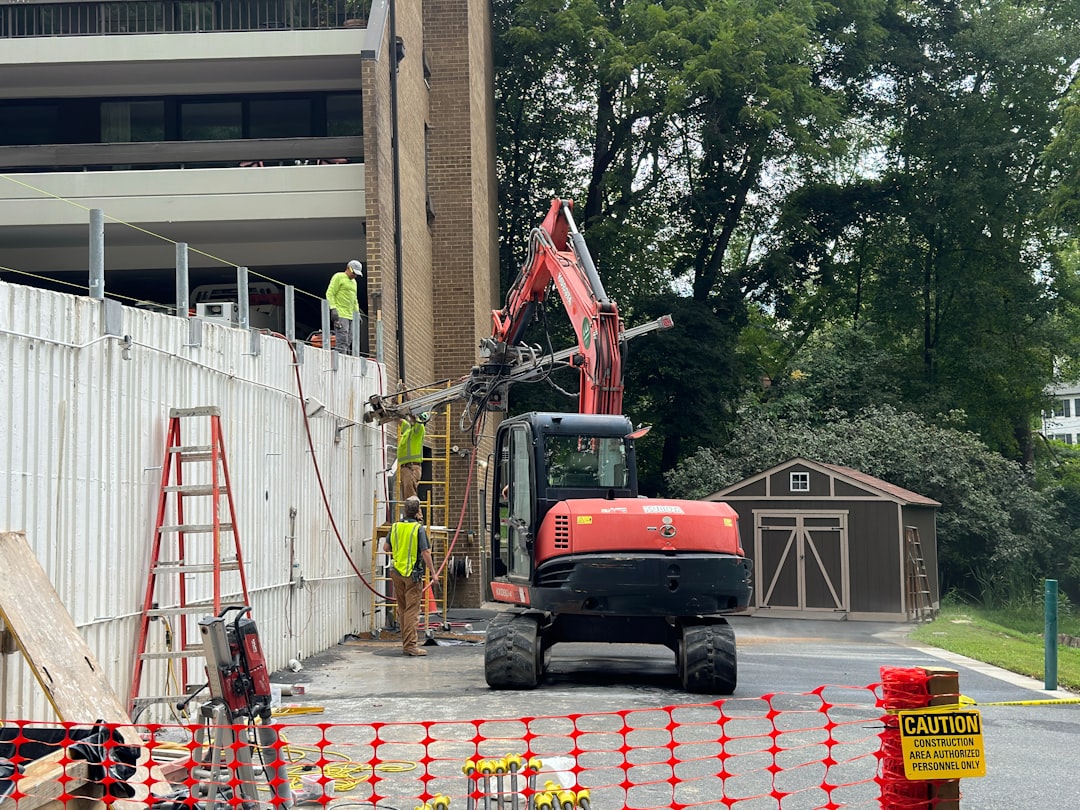
It’s normal for site costs to range from tens of thousands on an easy suburban lot to six figures on a sloped, wooded, or waterfront property.
Local labor market (and scheduling) changes real pricing
Even when material costs stabilize, labor availability and subcontractor backlog can drive pricing and timeline risk. In high-demand Maryland corridors (especially near DC and major employment hubs), builders often:
- Price in more contingency
- Charge more for tight schedules
- Pass through escalation clauses on select materials or subs
This is why two bids for the same plan can differ meaningfully—even in the same county—depending on builder workload and subcontractor relationships.
Finish level is not a “small” decision—it’s a cost system
Finishes don’t just affect paint and countertops. They affect:
- Cabinet package (stock vs semi-custom vs custom)
- Tile complexity (simple lay vs patterns, niches, linear drains)
- Flooring (LVP vs hardwood vs wide-plank)
- Trim level (basic vs craftsman vs detailed)
- Lighting plan (allowances vs designed fixtures)
- Appliance package and ventilation requirements
A “mid-range” spec sheet can be $60,000–$150,000 different from a “higher-end” one in a typical single-family home, especially once you include baths, kitchen, and trim.
A realistic way to think about “per square foot” in Maryland
Cost per square foot can help you compare broad scenarios, but it has built-in traps:
- Smaller homes often cost more per square foot (fixed costs like kitchens, baths, mechanicals, permits spread over fewer feet).
- Bigger homes can cost less per foot, but total dollars explode.
- Garage, porches, basements may be counted differently depending on who’s doing the math (heated vs enclosed vs total under roof).
If you’re benchmarking, make sure you know:
- Is it heated living area only or total enclosed?
- Does it include sitework?
- Does it include permits/fees/impact fees?
- Does it include builder overhead & profit?
- What finish level is assumed?
Example budget ranges (2026 estimates) to show variability
Below are illustrative examples to show how widely totals can swing. These are not quotes and do not include land unless stated.
Example A: 2,200 sq ft compact colonial, moderate finishes, easier lot
- Hard construction: $480,000–$650,000
- Sitework/utilities: $25,000–$75,000
- Permits/soft costs/fees: $20,000–$60,000
- Total (excluding land): $525,000–$785,000
Example B: 3,200 sq ft custom with walkout basement, higher-end finishes, sloped lot
- Hard construction: $1,000,000–$1,450,000
- Sitework/utilities/retaining/stormwater: $80,000–$220,000
- Permits/soft costs/fees: $35,000–$120,000
- Total (excluding land): $1,115,000–$1,790,000
The point isn’t the exact numbers—it’s that the same state can produce radically different outcomes based on decisions you may not have finalized yet (basement type, roof complexity, finish schedule, and the lot).
Maryland-specific checklist: the questions that change your price fast
If you want an estimate that’s actually useful, you need answers to questions like:
- What county/city is the build in (and what fee structure applies)?
- Is the site served by public water/sewer or well/septic?
- Flat lot or sloped? Any retaining walls likely?
- Any floodplain, critical area, or stormwater constraints?
- Basement type (slab/crawl/full/walkout) and waterproofing level?
- Roof complexity and exterior material (siding vs brick/stone)?
- Window count/size and performance target?
- HVAC strategy (heat pump, dual fuel, zoning, ERV/HRV)?
- Finish package defined or still “TBD allowances”?
- Garage size and whether there’s a bonus room above?
Each “unknown” is where budgets go off the rails, because builders have to guess—or load contingency.
Key Takeaway
Building a house in Maryland in 2026 isn’t about finding the “average cost.” It’s about understanding that your total price is the result of dozens of line-item choices plus location-driven fees and labor conditions. County-level differences (like the SDAT County Index ranges) and local policies (such as Baltimore County’s potential $6/sq-ft impact fee) show why two builds can differ by six figures even before you talk about luxury finishes.
See exactly what your build could cost (without guessing)
If you’re serious about budgeting, the fastest way to cut through the noise is to look at a line-item estimate built around your plan and your location.
- Try a free demo report to see the level of detail you’ll get (materials, labor, and scope categories) before you spend a dime: Try a free demo report
- When you’re ready, you can order your custom Cost To Build report for your specific house plan for just $32.95: order your custom Cost To Build report
Costtobuildahouse.com has been providing cost-to-build reports for nearly 20 years—because “average cost” isn’t what people actually need when they’re about to make a six- or seven-figure decision.