In this article
Cost To Build A House In Louisiana (2026)
If you’re trying to price a new build in Louisiana, you’ve probably already noticed the biggest problem: there isn’t one “Louisiana cost per square foot” that reliably predicts your total.
In 2026, the cost to build a house in Louisiana is shaped by hurricane wind requirements, flood zones, soil conditions, parish/city permit structures, local labor markets, finish level, and even seemingly small plan decisions (roof complexity, ceiling heights, garage size, number of baths, window count, etc.). Two homes with the same square footage can land tens—or hundreds—of thousands apart.
This guide uses current, real-world 2026 reference points and shows why a line-item estimate tied to your specific plan and build location is the only way to budget with confidence.
Free instant estimate · ~30 seconds
Quick Estimator
No sign-upRough planning range based on your inputs and current regional cost indices — not a quote. Your plan, lot, and selections move the number; the full report prices all 60+ items to your exact zip.
✓ Free — no sign-up · ✓ 60+ line items · ✓ ZIP-localized · ✓ Planning figures, not bids
Figures on this page come from the StartBuild cost engine — how we calculate.
Louisiana build-cost ranges (2026): realistic starting points
Most Louisiana new-build budgets fall into wide bands because “house cost” is really a bundle of dozens of scope decisions.
Estimated 2026 construction cost ranges (hard costs only, excluding land):
- Basic/Builder-grade: ~$150–$200 per sq. ft.
- Mid-range: ~$200–$275 per sq. ft.
- Higher-end/custom: ~$275–$400+ per sq. ft.
These are broad planning ranges, not quotes. They can be pushed down by simple designs and competitive labor—or pushed up fast by elevated foundations, premium windows/doors, complicated roofs, custom cabinetry, higher HVAC performance, and higher local labor demand.
What “cost per square foot” hides
A per-square-foot number tends to blur expensive items that don’t scale linearly with size:
- Foundations and elevation requirements
- Roof geometry (valleys, hips, dormers)
- Kitchens and bathrooms (fixture count matters)
- Mechanical complexity (multiple systems/zones, dehumidification)
- Site work (fill, drainage, long driveways, utility runs)
- Local code requirements (wind, flood, energy)
A smaller house with high complexity can cost more per foot than a larger, simpler home.
Louisiana isn’t one market: regional and city-level cost differences
Even inside Louisiana, costs shift by metro area, parish, and neighborhood. Differences usually come from:
- Labor availability and competition (commercial work, disaster rebuild cycles)
- Flood and wind design requirements
- Inspection/permit structures
- Site conditions (soil, drainage, fill needs)
- Material logistics and delivery access
Typical cost pressure patterns (not exact quotes):
- Greater New Orleans (Orleans/Jefferson/St. Tammany): often higher due to stricter local requirements, historic districts in parts of the city, higher demand, and flood/wind considerations.
- Baton Rouge / Ascension / Livingston: can be competitive but varies with growth corridors and subcontractor availability.
- Acadiana (Lafayette, surrounding parishes): often moderate, with swings depending on trades availability and storm activity.
- Lake Charles / Calcasieu: costs can spike during industrial booms and post-storm rebuild cycles.
- North Louisiana (Shreveport/Bossier, Ouachita/Monroe): sometimes lower overall, but labor pricing can still vary sharply by trade and timing.
The practical takeaway: when someone says “it costs $X to build in Louisiana,” ask: which parish, what flood zone, what wind exposure, and what finish level?
Wondering what these ranges mean for your town? The free calculator above localizes them to your ZIP.
Get my Louisiana estimate ↑A reality-based example budget (why totals vary so much)
Let’s run a simplified planning example for a 2,000 sq. ft. single-family home in Louisiana, not including land, using three finish levels.
Estimated 2026 base construction totals (planning-level):
- $150/sf: ~$300,000
- $225/sf: ~$450,000
- $325/sf: ~$650,000
That range is enormous—and it’s not “padding.” It’s the real spread created by structure, systems, and finishes. A few scope choices that commonly swing totals in Louisiana:
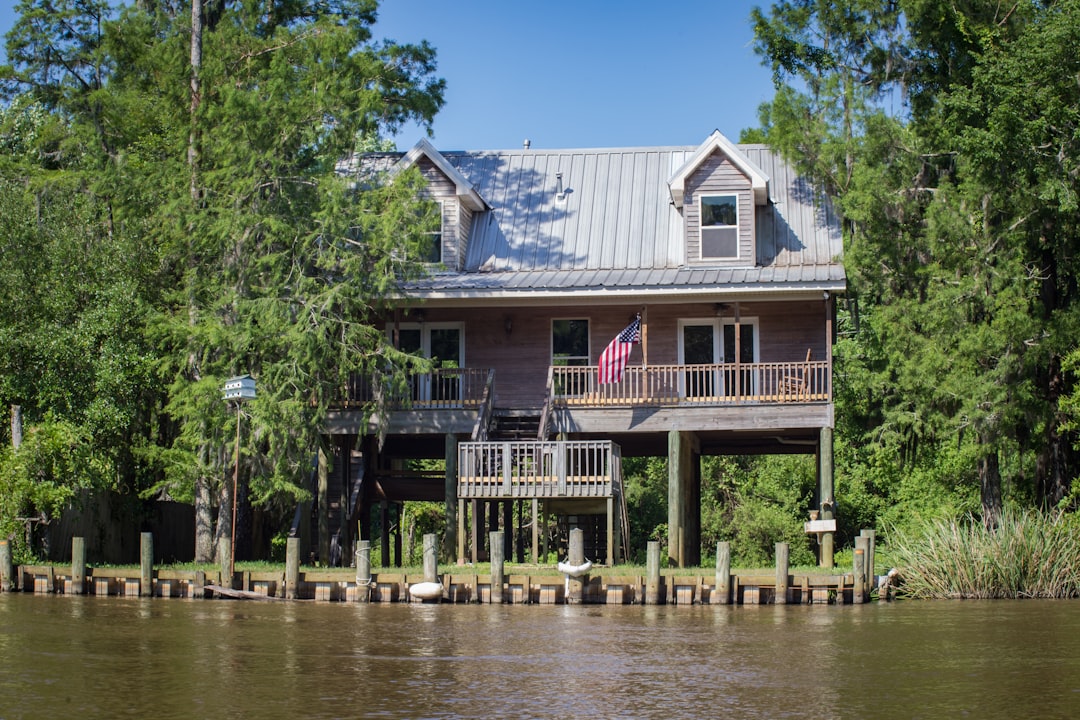
- Elevating the home (higher foundation, stairs, landings)
- Upgrading windows/doors for stronger wind performance
- More robust roofing assemblies and attachment details
- Better insulation, sealed attics, or dedicated dehumidification
- Higher cabinetry/trim packages and stone counts
- More complex MEP routing (multi-story, tight chases, long runs)
Labor costs in Louisiana: why trade pricing varies by parish
Labor isn’t just “a percentage.” It’s dozens of trade packages, each impacted by local wage expectations, availability, and scheduling risk.
A useful, publicly available reference point for labor pricing is Davis-Bacon wage determinations for residential construction in Louisiana. While many private residential projects are not required to follow Davis-Bacon, the posted rates help illustrate how wages differ by region and trade.
From SAM.gov’s Louisiana Residential Wage Determination LA20260001 (publication date 01/02/2026), examples include:
- Electrician: ~$29.47–$35.85/hr (varies by parish groupings)
- Plumber (including HVAC pipe): ~$25.90–$32.42/hr (varies by parish groupings)
Source: SAM.gov Wage Determination LA20260001 (Residential, Louisiana, 2026)
https://sam.gov/wage-determination/LA20260001/0
Why this matters to your build: if your plan is labor-intensive (more corners, more roof lines, more baths, more fixtures, more lighting, taller walls, more trim), a region with tighter labor supply can change total cost materially—especially once contractor overhead, insurance, scheduling, and profit are applied.
Permits and local fees: small line items that still move budgets
Permits are rarely the biggest cost line, but they’re a perfect example of why “Louisiana average” budgeting fails: each city/parish can calculate fees differently and add surcharges.
New Orleans building permit fee structure (example)
The City of New Orleans publishes a building permit fee estimator with a clear fee basis:
- $60 plus $5 per $1,000 of work
- If plans are required: plan review fee of $1 per $1,000 of work
- If within a local historic district: 50% surcharge on the permit fee
Source: City of New Orleans – Building Permit Fee
https://nola.gov/building-permit-fee-estimator/
What that can look like (illustrative):
If construction value is $450,000:
- Base: $60 + ($5 × 450) = $2,310
- Plan review: ($1 × 450) = $450
- Subtotal: ~$2,760 (before any district surcharge or additional trade permits)
Other jurisdictions may calculate by square footage, valuation, or separate plan review and inspection schedules. The point isn’t the exact number—it’s that your fee total depends on where you build and the declared valuation.
The Louisiana-specific cost drivers most people underestimate
1) Flood zone and elevation requirements
In many Louisiana locations, flood risk changes the entire foundation and first-floor strategy. Costs can jump due to:
- Higher foundations (more concrete/masonry, more labor)
- Structural requirements for elevated framing
- Stairs, landings, railings, and access
- Utility elevation/relocation requirements
- Additional site fill, drainage work, and grading
Even if your plan is the same, moving from a slab-on-grade scenario to an elevated system can be a major budget pivot.
2) Wind/hurricane detailing and exterior shell choices
Coastal and hurricane-prone design isn’t just a checkbox. Depending on location and design intent, costs can rise from:
- Window/door upgrades (impact-rated or higher performance)
- Stronger attachment details (roof-to-wall connections, sheathing nailing patterns)
- Upgraded garage doors
- Secondary water barriers and flashing details
- More robust roof assemblies (especially on complex roofs)
These costs don’t scale linearly with square footage—two homes of the same size can differ widely based on window count and roof geometry.
3) Soil conditions, drainage, and site prep
Louisiana sites can require more work than buyers expect:
- Clearing, hauling, and disposal
- Fill and compaction
- Managing high water tables
- Driveway/culvert needs
- Long utility runs in rural areas
- Unexpected excavation or stabilization
Site work is one of the most variable line items because it depends on the lot, not the plan.
4) Mechanical system design (humidity control is real money)
Louisiana’s humidity and heat shape HVAC choices. Costs can increase with:
- Higher SEER/efficiency equipment
- Dedicated dehumidification
- Zoned systems for larger or multi-story plans
- Better duct design and sealing
- Spray foam or sealed attic strategies (which affect HVAC load and installation approach)
These decisions change not just equipment cost, but labor, duct routing, insulation scope, and long-term performance.
5) Finish level (and “mid-range” is a moving target)
Finish allowances are where budgets most often blow up:
- Cabinets: stock vs semi-custom vs custom
- Countertops: laminate vs quartz vs natural stone
- Flooring: LVP vs tile vs hardwood
- Trim/doors: basic profiles vs upgraded packages
- Plumbing fixtures and lighting: count and quality add up fast
A “nice but not crazy” finish level can still add $50–$100+ per sq. ft. compared to a basic package—especially in kitchens and baths.

Soft costs you should plan for (often excluded from “build price”)
When someone quotes a “cost to build,” they may be talking about different totals. Besides hard construction, you may have:
- Architectural/engineering (especially if modifying plans for elevation/wind)
- Surveys, geotechnical (when needed), and site tests
- Utility connection fees and impact fees (where applicable)
- Financing costs, construction interest
- Builder overhead and profit (real costs of running the project)
- Contingency (especially for site unknowns)
A good budget separates these clearly so you’re not surprised late in the process.
Why two Louisiana builds with the same plan can be $150,000+ apart
Here’s a realistic scenario that explains the spread:
- House A: slab foundation, simple gable roof, average window count, builder-grade finishes, short utility runs, straightforward lot
- House B: elevated foundation for flood risk, more complex roof, more/larger windows, upgraded exterior openings, higher-end kitchen/bath package, difficult drainage/site conditions, longer driveway and utilities
Same square footage, same plan name, very different totals—because the plan interacts with the site and the jurisdiction.
Key Takeaway
In Louisiana, “cost to build a house” is not a single number—it’s a range driven by elevation and flood exposure, wind/hurricane detailing, site prep and drainage, local labor pricing by parish, and the finish and mechanical choices inside your plan. The only trustworthy way to budget is with a line-item estimate tied to your exact house plan and your build location.
See the line items before you buy (and get a real budget for your plan)
If you want to understand what your build might actually cost—without relying on generic per-square-foot guesses—start by seeing how a line-item report works.
- Try a free demo report to preview the level of detail and how costs are organized: Try a free demo report
- When you’re ready, order your custom Cost To Build report for your specific plan and location for just $32.95: order your custom Cost To Build report
Costtobuildahouse.com has been providing detailed cost-to-build reports for nearly 20 years—because real budgeting requires more than an average.