In this article
Cost To Build A House In Connecticut (2026)
If you’ve tried to get a straight answer to “How much does it cost to build a house in Connecticut?” you’ve probably seen a wide range of numbers—because that’s the truth. Connecticut construction costs in 2026 are heavily shaped by local labor availability, permit formulas tied to project value, site conditions (ledge is real), energy-code expectations, and finish choices that can swing totals by hundreds of thousands.
This guide uses current, real-world 2026 reference points (with sources) to show why the “average cost” is rarely useful—and why a line-item estimate for your specific plan and town is the only way to budget with confidence.
Free instant estimate · ~30 seconds
Quick Estimator
No sign-upRough planning range based on your inputs and current regional cost indices — not a quote. Your plan, lot, and selections move the number; the full report prices all 60+ items to your exact zip.
✓ Free — no sign-up · ✓ 60+ line items · ✓ ZIP-localized · ✓ Planning figures, not bids
Figures on this page come from the StartBuild cost engine — how we calculate.
The realistic 2026 cost range (and why it’s so wide)
For a typical single-family build in Connecticut in 2026, many homeowners will land somewhere in this broad range (estimates, not quotes):
- Basic / value-focused build: ~$200–$275 per sq ft
- Mid-range custom: ~$275–$400 per sq ft
- High-end custom: ~$400–$600+ per sq ft
That spread is not “marketing.” It reflects real cost drivers that change from one lot and one plan to the next:
- excavation difficulty (soil vs. rock/ledge)
- foundation type (slab, crawl, full basement, walkout)
- framing complexity (simple box vs. multiple gables/dormers)
- energy efficiency requirements and HVAC design
- finish level (windows, cabinets, flooring, tile, trim)
- local labor rates and subcontractor competition
- permit and impact-type fees that vary by town and project value
A 2,400 sq ft home at $240/sq ft is ~$576,000 for construction. The same size home at $360/sq ft is ~$864,000. Same square footage—nearly a $300k swing.
Connecticut-specific cost drivers you can’t ignore
1) Permits are often calculated from your project value (and the formulas vary by town)
One of the biggest surprises for homeowners is how building permits are calculated. In many Connecticut towns, fees are tied directly to the estimated construction cost—so higher finishes can increase permit costs too.
For example:
-
Bethel, CT posts permit fees based on estimated construction cost: $25.26 for the first $1,000 and $8.26 for each additional $1,000 (schedule revised 9/1/2023).
Source: Town of Bethel Building Permit Fees (https://bethel-ct.gov/building-fee-schedule) -
Stamford, CT lists residential permit fees as $13.00 per $1,000 of construction value (plus state education fund fee noted on the page). Stamford also publishes “minimum cost per square foot” assumptions used to establish construction value (e.g., “Normal Residential Construction $200.00”).
Source: City of Stamford Building Permit Fees (https://www.stamfordct.gov/government/operations/building-department/building-permit-fees)
What this means in practice: two neighboring towns can produce meaningfully different permit totals even for the same plan, and the building department may set a minimum valuation per square foot regardless of your contract.
2) Labor pricing is a major driver in CT—and it moves with the market
Labor is often the biggest component in Connecticut, especially for builds that require skilled trades scheduling and tight timelines.
Connecticut’s own prevailing wage program underscores how trade rates can run high in the region (prevailing wage applies to certain public projects, not typical single-family homes—but it’s a useful “ceiling indicator” for labor market pressure). Connecticut DOL posts annual adjusted prevailing wage schedules and notes adjustments effective July 1.
Source: CT Department of Labor Prevailing Wage Information (https://portal.ct.gov/dol/divisions/wage-and-workplace-standards/prevailing-wage)
Even if you’re not subject to prevailing wage, the same labor pool influences private pricing—particularly in Fairfield County and shoreline markets where demand and cost of living are higher.
3) Lumber and commodity inputs still introduce volatility
Material costs aren’t just “what you pay at Home Depot.” Commodity pricing impacts framing packages, trusses, sheathing, and overall risk for builders.
As a reference point, lumber pricing in early April 2026 was reported around the high-$500s per thousand board feet on commodity tracking (with frequent changes).
Source: Trading Economics lumber price data updated April 2026 (https://tradingeconomics.com/commodity/lumber)
You won’t “buy lumber futures,” but your builder’s supplier pricing, lead times, and escalation clauses can be influenced by these swings—especially if you lock a contract before final selections.
Wondering what these ranges mean for your town? The free calculator above localizes them to your ZIP.
Get my Connecticut estimate ↑Regional cost differences inside Connecticut (why ZIP code matters)
Connecticut is small geographically, but construction pricing can vary noticeably by region due to labor availability, permitting culture, access constraints, and finish expectations.
Here’s a practical way to think about regional variation (estimates for 2026):
- Fairfield County (Stamford/Greenwich/Norwalk area): typically the highest pricing pressure; high demand, higher labor rates, more complex site constraints, and higher-end finish expectations.
- New Haven shoreline corridor (Milford–Branford–Guilford): often elevated costs, especially for coastal site requirements, tight lots, or higher wind/ weather exposure design choices.
- Hartford / central CT (West Hartford, Farmington Valley, etc.): frequently more balanced; still varies widely by town and site.
- Eastern CT / “Quiet Corner”: can be less expensive in some cases, but don’t assume it’s always cheaper—limited subcontractor availability can increase bids, and rural sitework (long drives, wells/septic, long utility runs) can add major cost.
The key: regional averages don’t build houses—specific plans on specific lots do.
A more useful way to budget: break the build into cost buckets
Instead of relying on one number per square foot, it’s smarter to model your project as a group of large buckets—because each bucket can change independently.
Typical major buckets (many projects fall roughly in these ranges)
- Sitework + utilities: often 5%–20% of total (higher with ledge, long driveway, septic/well)
- Foundation + concrete: often 8%–15% (walkout basements and complex footprints push higher)
- Framing + sheathing: often 12%–20% (complex roofs and spans push higher)
- Windows + exterior doors: often 4%–10% (premium glazing can double this)
- MEP trades (plumbing/electrical/HVAC): often 15%–25%
- Insulation + energy measures: often 2%–6%
- Interior finishes (drywall, trim, paint, flooring, tile): often 15%–30%
- Kitchen/baths (cabinets, tops, fixtures): often 8%–20%
- GC overhead & profit: often 10%–20% depending on scope and risk
- Permits/fees/engineering: varies widely by town and complexity
The point isn’t the exact percentages—it’s that one category can blow up while others stay normal. A “simple” square-foot estimate hides that risk.
Connecticut line items that commonly cause budget surprises
Site prep and excavation (especially rock/ledge)
Connecticut lots often involve:
- ledge removal / blasting
- extensive drainage and retaining
- tight access for equipment
- export of unsuitable soils
A plan that looks affordable on paper can become expensive quickly if excavation turns into a rock project.
Septic vs. sewer, and well vs. public water
If you’re outside a fully served area:
- septic design and installation costs can be significant
- engineered systems (due to soils/lot constraints) cost more
- wells may require deeper drilling and water treatment
These costs aren’t reflected in “per square foot” build numbers.
Energy efficiency and HVAC design choices
Even when you’re not going full net-zero, choices like:
- higher-performance windows
- more insulation
- heat pumps vs. furnace + AC
- ducted vs. ductless layouts
- ERV/HRV ventilation approaches
…can change both upfront costs and long-term operating costs. Connecticut’s climate makes these decisions matter.
Finish level: the silent multiplier
A “standard” allowance might assume:
- stock cabinets
- basic quartz/laminate tops
- mid-grade plumbing fixtures
- LVP or basic hardwood options
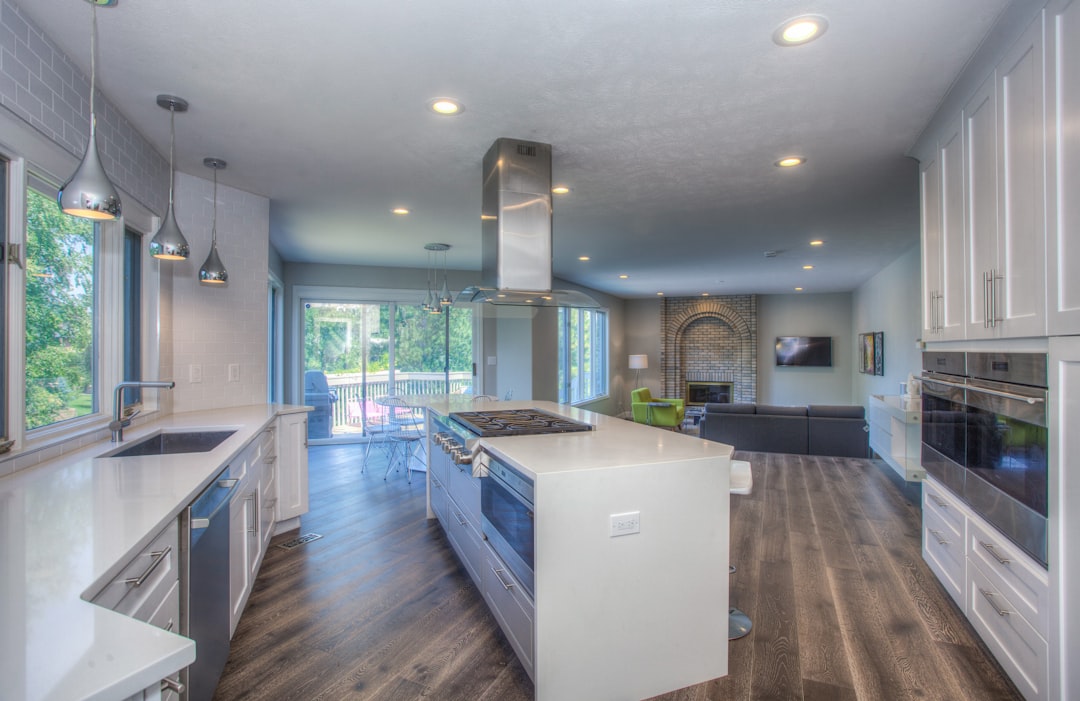
But a few common upgrades—custom cabinetry, premium tile, wider-plank hardwood, higher-end windows, upgraded trim packages—can add tens of thousands quickly.
Example budget scenarios (same state, very different totals)
Below are simplified examples to show why homeowners get radically different answers. These are 2026 estimates and meant to illustrate variability.
Scenario A: 2,000 sq ft, simple colonial, straightforward lot (mid-state)
- Base construction at ~$240/sq ft: $480,000
- Sitework/driveway/utility tie-ins: $25,000–$60,000
- Permits/fees (town dependent): $5,000–$20,000+
- Total rough range: $510,000–$560,000+ (plus land)
Scenario B: 2,800 sq ft, custom plan, walkout basement, higher finishes (shoreline or Fairfield County)
- Base construction at ~$360/sq ft: $1,008,000
- Sitework/retaining/drainage: $75,000–$200,000
- Permits/fees (value-based): $10,000–$35,000+
- Total rough range: $1.09M–$1.24M+ (plus land)
These scenarios aren’t extremes—they’re common Connecticut realities.
Why online calculators and “average cost” articles fall short
Most online “cost to build” numbers fail in Connecticut because they:
- assume flat, easy lots (many aren’t)
- ignore town-by-town permit formulas and valuation rules
- assume a generic finish package
- ignore plan complexity (rooflines, spans, structural upgrades)
- don’t account for schedule pressure and subcontractor availability
- omit line-item detail that lets you value-engineer intelligently
If you’re serious about building, you need a budget that answers questions like:
- What does your plan’s foundation cost (not “a foundation”)?
- How much are the windows in your window schedule?
- What’s a realistic allowance for the number of baths and fixtures you have?
- How much should you carry for excavation risk in your town/soil type?
Key Takeaway
Connecticut new-home construction costs in 2026 are best understood as a range driven by variables, not a single number. Permits can be value-based and town-specific (with published fee schedules in places like Bethel and Stamford), labor costs are shaped by a competitive Northeast trade market (reflected in CT’s prevailing wage environment), and materials like lumber remain prone to market swings. The only reliable way to budget is to estimate your exact plan in your exact location, with line-item detail that exposes the true cost drivers.
See the level of detail you should be budgeting with (free demo + affordable custom report)
If you’re trying to make decisions on size, layout, basement type, or finishes, a line-item report can help you spot where the money actually goes—before you commit.
- Start by exploring a sample so you can see the format and detail: Try a free demo report
- When you’re ready, you can get a report priced for your specific house plan and location for $32.95: order your custom Cost To Build report
CostToBuildAHouse.com has been providing detailed cost-to-build reports for nearly 20 years—because the real answer is never just “$X per square foot.” It’s the line items.